
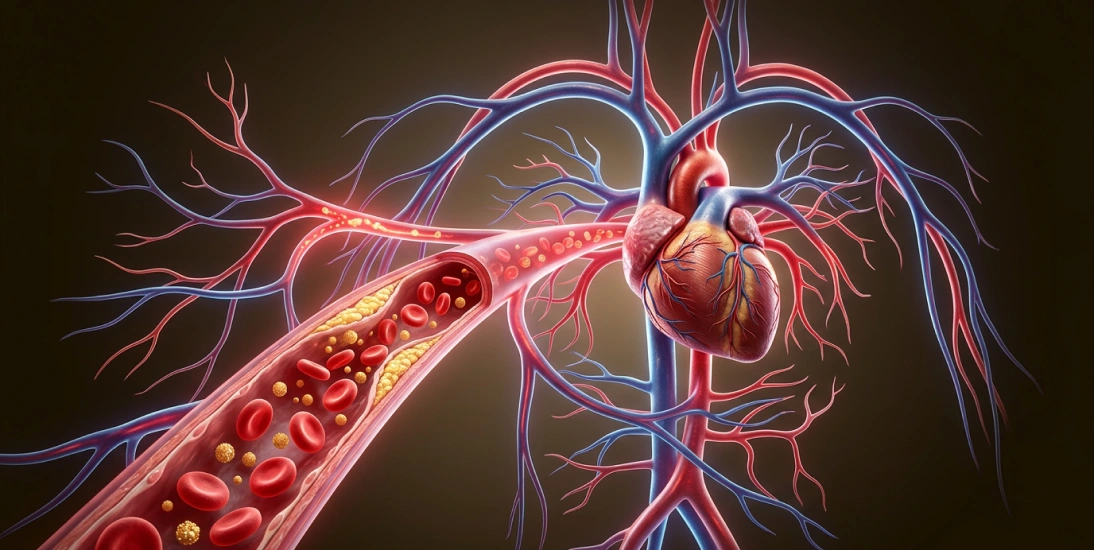



That is where the cholesterol conversation gets confusing. People hear “high cholesterol” and immediately think cholesterol itself is bad. But the real question is not simply, “Do you have cholesterol?” Of course you do. The better question is: What kind of particles are carrying it, how many are there, and what metabolic environment are they moving through? That is where things begin to matter.
Myth: Cholesterol is bad
That is too simplistic.Cholesterol is essential for health. Your body even makes most of the cholesterol it needs on its own. It is found in every cell, helps maintain membrane structure and fluidity, and serves as the raw material for key hormones. So the goal is not to “eliminate cholesterol.” The goal is to understand when cholesterol transport becomes harmful.
Truth: The real danger is not cholesterol alone, but atherogenic particles and the environment they are created in
What often gets called “bad cholesterol” is LDL. But even that phrase can be misleading. LDL is not poison. LDL is a carrier. It transports cholesterol and other lipids through the bloodstream. The real issue is when there are too many cholesterol-carrying particles, especially ApoB-containing particles, because those are the particles that can enter the artery wall and contribute to plaque formation over time. ApoB is increasingly recognized as a stronger marker of cardiovascular risk than LDL-C alone in many situations.
This is why many doctors now look beyond “total cholesterol” and even beyond basic LDL-C. They pay closer attention to ApoB, LDL particle number, triglycerides, HDL, insulin resistance, and inflammation. Mark Hyman has made this point repeatedly in his work, arguing that LDL alone does not tell the whole story and that particle number and metabolic context matter more.
So, what is really “bad” about cholesterol?
What is harmful is not simply the presence of cholesterol, but the combination of things like:
- Too many ApoB-containing particles
- Small, dense LDL particles
- High triglycerides
- Low HDL
- Insulin resistance
- Inflammation
- Oxidative stress
That pattern is often called atherogenic dyslipidemia or diabetic dyslipidemia. It is commonly seen with insulin resistance and metabolic dysfunction. The American Heart Association notes that diabetes and metabolic dysfunction often raise triglycerides, lower HDL, and worsen the overall lipid pattern.
This is exactly why functional medicine doctors often say the deeper issue is not “cholesterol” by itself. It is the metabolic imbalance behind the cholesterol pattern.
Dr. Mark Hyman puts it bluntly: “Sugar and starch is what actually screws up your cholesterol.”
That statement is stronger than mainstream guidelines would phrase it, but it points to something real: diets high in refined carbohydrates, added sugars, and ultra-processed food can raise triglycerides, worsen insulin resistance, and push the body toward a more dangerous lipid pattern.
Why sugar and ultra-processed carbs are such a big problem
This is where many people get it backwards.
A diet full of soda, sweets, white flour, packaged snacks, fast food, and constant blood sugar spikes does not just affect glucose. It can also affect triglycerides, HDL, liver fat, insulin signaling, inflammation, and LDL particle behavior. Refined carbohydrates and sugar are strongly linked with higher triglycerides, and high triglycerides often travel with the more dangerous metabolic picture.
Harvard materials note that refined carbohydrates can cause surges in blood sugar and insulin while boosting triglycerides and lowering HDL. Mayo Clinic also states that avoiding sugar and refined carbohydrates can help lower triglycerides.
Rhonda Patrick’s platform has also emphasized this nuance. In a FoundMyFitness summary, she notes that “refined sugar is surely the trigger” when large LDL is converted into the more concerning small, dense LDL pattern. So yes, for many people, the more dangerous pattern is not created by eating real food with healthy fats. It is created by the modern metabolic storm: ultra-processed food, refined carbs, insulin resistance, stress, inactivity, and inflammation.
Is fat really the villain?
Not automatically.
Healthy fats from foods like olive oil, avocados, nuts, seeds, and fatty fish are consistently associated with better cardiometabolic patterns, and replacing refined carbohydrates with unsaturated fats can improve triglycerides and HDL. Harvard and Mayo Clinic both support this direction.
But it would also be inaccurate to say that all fat is harmless. Mainstream evidence still shows that trans fats are harmful, and excess saturated fat can raise LDL and ApoB in many people, especially depending on genetics, baseline metabolic health, and what that fat is replacing in the diet. Huberman’s public materials also reflect that balanced view: reduce ultra-processed foods and refined sugar, but also be mindful that saturated fat can raise LDL/ApoB in some people.
So, the most honest statement is this:
Fat is not the villain. Bad context is the villain.
A whole-food meal with protein, fiber, and healthy fats is metabolically very different from a high-sugar, high-flour, ultra-processed diet.
Which foods tend to worsen the “bad cholesterol” pattern?
The strongest culprits are usually not eggs or real-food fats. They are more often foods such as:
- Sugary drinks
- Sweets and desserts
- White bread, white pasta, white flour products
- Chips, crackers, and packaged snack foods
- Fast food and fried processed foods
- Foods high in trans fats or industrially processed fats
- Diets that are both highly processed and low in fiber
These patterns are associated with higher triglycerides, worse insulin sensitivity, weight gain, and a more atherogenic lipid profile.
And what foods help?
The foods most consistently linked with better lipid and metabolic health include:
- High-fiber foods like oats, legumes, fruits, and vegetables
- Whole grains instead of refined grains
- Olive oil
- Nuts and seeds
- Fish rich in omega-3s
- Beans and other minimally processed plant foods
- Balanced meals with protein, fiber, and healthy fats
Soluble fiber, in particular, can help lower LDL. Whole grains in place of refined grains are also associated with lower LDL, triglycerides, and insulin levels.
What about salt? Is the problem really sugar?
For cholesterol and triglycerides, sugar and refined carbs are often a bigger problem than salt. That part is fair. High sugar intake is closely linked with higher triglycerides and worse metabolic health.
But salt should not be dismissed completely. Sodium does not directly cause high cholesterol, but too much sodium can raise blood pressure, and high blood pressure is still a major cardiovascular risk factor. So, for cholesterol, sugar/refined carbs may be the bigger issue; for blood pressure, sodium still matters.
A more accurate way to say it is:
For many people, salt is not the main reason their lipid panel looks bad.
But sugar, refined carbs, insulin resistance, and ultra-processed foods often are.
Still, sodium matters for blood pressure.
What functional medicine gets right here
Functional medicine doctors like Mark Hyman often focus on the root cause behind the lipid pattern: insulin resistance, inflammation, poor metabolic health, sedentary lifestyle, and ultra-processed food exposure. That is a valuable lens, because it moves the conversation beyond fear of eggs and butter and toward the bigger picture.
At the same time, the strongest mainstream cardiology evidence reminds us not to swing too far in the opposite direction. ApoB-containing particles still matter, LDL still matters, and some people truly do respond poorly to high saturated fat intake. So, the best approach is not dogma. It is context, labs, and personalization.
In the end…
Cholesterol is not the villain people think it is. It is one of the most essential molecules in the human body. The real problem begins when cholesterol is carried in too many atherogenic particles and moves through a body burdened by insulin resistance, inflammation, oxidative stress, and ultra-processed food overload.
So maybe the better message is this:
Don’t fear cholesterol.
Fear metabolic dysfunction.
Fear the diet that drives inflammation, high triglycerides, insulin resistance, and damaged particle behavior.
That is where the truth begins.
Sources:
1. Physiology, Cholesterol – StatPearls – NCBI Bookshelf
https://www.ncbi.nlm.nih.gov/books/NBK470561/
2. Biochemistry, Cholesterol – StatPearls – NCBI Bookshelf
https://www.ncbi.nlm.nih.gov/books/NBK513326/
3. Physiology, Bile Acids – StatPearls – NCBI Bookshelf
https://www.ncbi.nlm.nih.gov/books/NBK549765/
4. Biochemistry, Apolipoprotein B – StatPearls – NCBI Bookshelf
https://www.ncbi.nlm.nih.gov/books/NBK538139/
5. Is an apoB test a better way to check your cholesterol? – Harvard Health
https://www.health.harvard.edu/heart-health/is-an-apob-test-a-better-way-to-check-your-cholesterol
6. Apolipoprotein B: Bridging the Gap Between Evidence and Clinical Practice – Circulation
https://www.ahajournals.org/doi/10.1161/CIRCULATIONAHA.124.068885
7. Role of apolipoprotein B in the Clinical Management of Cardiovascular Risk in Adults – National Lipid Association
https://www.lipid.org/nla/role-apolipoprotein-b-clinical-management-cardiovascular-risk-adults-expert-clinical-consensus
8. Apolipoprotein B (APOB) Test – Cleveland Clinic
https://my.clevelandclinic.org/health/diagnostics/24992-apolipoprotein-b-test
9. Triglycerides: Why do they matter? – Mayo Clinic
https://www.mayoclinic.org/diseases-conditions/high-blood-cholesterol/in-depth/triglycerides/art-20048186
10. Cholesterol: Top foods to improve your numbers – Mayo Clinic
https://www.mayoclinic.org/diseases-conditions/high-blood-cholesterol/in-depth/cholesterol/art-20045192
11. What high triglycerides mean and why it matters to your heart – Mayo Clinic News Network
https://newsnetwork.mayoclinic.org/discussion/mayo-clinic-minute-what-high-triglycerides-mean-and-why-it-matters-to-your-heart/
12. Mayo Clinic Q and A: Cholesterol – know your numbers
https://newsnetwork.mayoclinic.org/discussion/mayo-clinic-q-and-a-cholesterol-know-your-numbers/
13. Cholesterol abnormalities & diabetes – American Heart Association
https://www.heart.org/en/health-topics/diabetes/diabetes-complications-and-risks/cholesterol-abnormalities–diabetes
14. Sodium and Your Health – CDC
https://www.cdc.gov/salt/sodium-potassium-health/index.html
15. Mark Hyman, MD – podcast/article reference on cholesterol, ApoB, insulin resistance
https://drhyman.com/blogs/content/podcast-ep856
16. FoundMyFitness / Rhonda Patrick – discussion of saturated fat, LDL pattern, and refined sugar
https://www.foundmyfitness.com/episodes/saturated-fat