
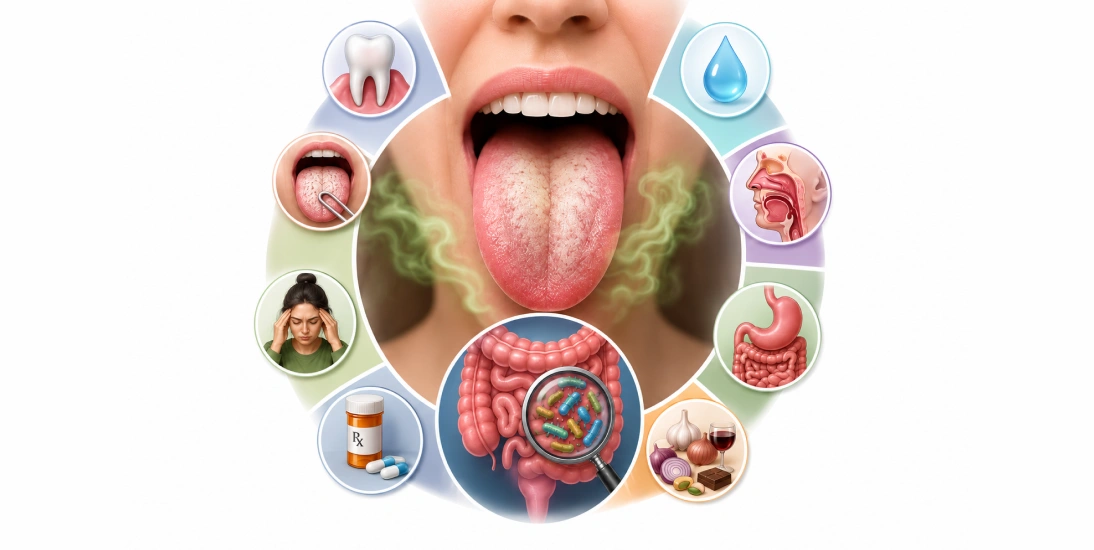



The most important point: mouthwash and mints only mask the smell. They do not fix the root cause. Mayo Clinic also explains that many products give only short-term improvement because they do not address the cause of bad breath.
1. The Most Common Cause: Bacteria in the Mouth
Most bad breath starts in the mouth. Odor-producing bacteria live especially on the back of the tongue, between the teeth, under the gums, around dental work, and in gum pockets.
These bacteria break down proteins and sulfur-containing amino acids, producing volatile sulfur compounds, or VSCs. These are the gases responsible for the “rotten egg,” sulfur, or unpleasant smell. Research consistently connects halitosis with tongue coating, oral bacteria, and periodontal disease.
Common oral causes include:
Coated tongue
The tongue has an uneven surface that traps bacteria, food particles, dead cells, and mucus. This is one of the biggest sources of bad breath.
Poor oral hygiene
Not brushing, flossing, or cleaning the tongue allows food particles and plaque to build up.
Gum disease
Gingivitis and periodontitis create inflamed gum pockets where bacteria can grow. Bad breath can be one of the main signs of periodontal disease.
Cavities or dental infections
Decay, abscesses, and infected dental work can produce chronic odor.
Dirty retainers, dentures, mouth guards, or Invisalign trays
These can hold bacteria, fungi, and food particles if they are not cleaned very well.
2. Dry Mouth: A Very Important Cause
Saliva is one of the body’s natural “mouth cleansers.” It washes away bacteria, food particles, and acids. When saliva is low, bacteria grow more easily.
Dry mouth may happen from:
- Not drinking enough water
- Mouth breathing
- Sleeping with the mouth open
- Snoring or sleep apnea
- Stress
- Coffee, alcohol, smoking, vaping
- Certain medications
- Sjögren’s syndrome or salivary gland problems
Mayo Clinic and Johns Hopkins both list dry mouth as a key cause of bad breath because less saliva means the mouth cannot clean itself properly.
Functional medicine note: dry mouth can also be a clue for mineral imbalance, dehydration, blood sugar imbalance, chronic stress, medication burden, or autoimmune patterns.
3. Nose, Sinus, Throat, and Tonsils
Bad breath does not always come from the teeth. It can also come from the upper airway.
Possible causes include:
Postnasal drip
Mucus dripping into the throat feeds bacteria and can create odor.
Chronic sinus infection or allergies
Inflammation and trapped mucus can contribute to bad breath.
Tonsil stones
Tonsil stones, or tonsilloliths, are small collections of debris and bacteria in the tonsil crypts. They can smell very strong.
Chronic tonsillitis or throat infections
The tonsils can hold bacteria that produce volatile sulfur compounds. StatPearls notes that tonsillitis and tonsil stones can contribute to halitosis because bacteria in the tonsil crypts produce odor-causing compounds.
Functional medicine note: chronic sinus/throat symptoms often connect with food sensitivities, mold exposure, environmental allergies, immune dysregulation, reflux, or oral microbiome imbalance.
4. Digestive Causes: GERD, Reflux, SIBO, H. pylori, Low Stomach Acid
Many people say, “My bad breath comes from my stomach.” And yes, in many cases, it can be connected. Although the mouth is still one of the most common places where bad breath begins, digestive causes are very important and should not be ignored, especially from a functional medicine perspective.
In my practice, I often see that people with persistent bad breath later report symptoms of acid reflux, bloating, burping, constipation, or digestive discomfort. This shows how connected the mouth, stomach, gut, and microbiome can be. When digestion is not working well, food may ferment, bacteria may overgrow, stomach acid may be imbalanced, and reflux may bring odors upward into the mouth and throat.
Digestive contributors may include:
GERD or reflux
Reflux can bring acid, bile, or partially digested food odors upward. This can create a sour, bitter, acidic, or unpleasant smell in the breath. Bad breath related to reflux may be worse after meals, when lying down, or in the morning.
SIBO
Small intestinal bacterial overgrowth can cause bloating, gas, belching, altered bowel movements, and sometimes bad breath. When bacteria overgrow in the small intestine, fermentation increases, and this can contribute to gas, digestive discomfort, and odor.
H. pylori
H. pylori can contribute to gastritis, reflux-like symptoms, burping, nausea, and digestive inflammation. In some people, H. pylori may be part of the picture when bad breath is persistent and comes with upper digestive symptoms.
Low stomach acid or poor digestion
When stomach acid is low or protein digestion is poor, food can sit longer in the stomach and digestive tract. This may increase fermentation, gas, reflux, bloating, and unpleasant breath.
Constipation
Slow elimination can increase fermentation and systemic toxic burden. In functional medicine, chronic constipation is always considered when bad breath is persistent, because the body needs healthy elimination to remove waste efficiently.
5. Food, Diet, and Metabolic Causes
Some foods cause temporary bad breath, such as garlic, onion, alcohol, coffee, and certain spices. These compounds can enter the bloodstream and be exhaled through the lungs.
But persistent bad breath may also connect to metabolic patterns:
High sugar and refined carbohydrates
Sugar feeds oral bacteria and supports plaque, cavities, gum inflammation, and dysbiosis.
High-protein diet without enough fiber/hydration
Protein can increase sulfur compounds if oral hygiene, digestion, hydration, and bowel movements are poor.
Keto, fasting, or very low-carb diets
These can create “ketone breath,” which may smell fruity, metallic, or like acetone.
Diabetes or blood sugar imbalance
Johns Hopkins lists diabetes as a health condition that can be associated with bad breath. A fruity or acetone-like breath smell can be a warning sign of high ketones and should be medically evaluated, especially in diabetes.
Liver or kidney dysfunction
These are less common, but important. Johns Hopkins lists liver and kidney disorders among possible health-related causes of bad breath.
6. Medications and Supplements
Some medications cause dry mouth, and dry mouth can create bad breath. Mayo Clinic also notes that some medicines can cause bad breath either by drying the mouth or by releasing chemicals that may be carried on the breath.
Common contributors may include:
- Antihistamines
- Antidepressants
- Blood pressure medications
- Diuretics
- Sleep medications
- Decongestants
- Some pain medications
- Alcohol-based mouthwashes
- High-dose sulfur-containing supplements in sensitive people
Functional medicine note: do not stop prescribed medication without the prescribing doctor, but it is important to identify whether dry mouth started after a medication change.
7. Functional Medicine Approach: Don’t Mask It, Find the Root Cause
A functional medicine approach asks:
Where is the odor coming from?
Mouth, gums, tongue, tonsils, sinuses, stomach, gut, metabolism, liver, kidneys, or medications?
What is feeding the bacteria?
Sugar, poor oral hygiene, low saliva, mucus, protein residues, reflux, dysbiosis, constipation?
What is weakening the terrain?
Inflammation, poor sleep, stress, nutrient deficiencies, low immunity, poor digestion, mouth breathing?
Step-by-Step Functional Medicine Plan
Step 1: Start with the oral microbiome
This is the first place to check because most bad breath is oral.
Daily basics:
- Brush teeth 2x/day
- Floss daily
- Use a tongue scraper, especially on the back of the tongue
- Replace toothbrush regularly
- Clean retainers, dentures, Invisalign trays, night guards daily
- Avoid alcohol-based mouthwash
- Consider a dentist or periodontist evaluation for gum disease, cavities, infection, or plaque buildup
Tongue cleaning is important because tongue coating is a major source of volatile sulfur compounds. Mechanical tongue cleaning has been studied as a way to reduce oral malodor and tongue coating.
Step 2: Hydration and saliva support
Support saliva naturally:
- Drink enough water
- Add electrolytes/minerals if needed
- Avoid constant coffee without water
- Reduce alcohol
- Avoid smoking/vaping
- Chew xylitol gum if tolerated
- Breathe through the nose, not the mouth
- Evaluate snoring or sleep apnea if morning breath is severe
Functional medicine note: saliva is part of the immune defense of the mouth. A dry mouth is a dysbiosis-friendly mouth.
Step 3: Reduce bacterial fuel
Food strategy:
- Reduce sugar, candy, sweet drinks, refined flour, crackers, cookies, and ultra-processed snacks
- Increase fiber from vegetables, herbs, greens, seeds, legumes if tolerated
- Eat enough protein, but support digestion and hydration
- Add polyphenol-rich foods: parsley, mint, green tea, berries, olive oil, herbs
- Avoid frequent snacking if there is plaque, reflux, or dysbiosis
- Observe triggers: dairy, gluten, garlic, onion, alcohol, coffee, spicy foods, high-sulfur foods
This does not mean all sulfur foods are bad. Garlic, onion, cruciferous vegetables, and eggs can be healthy, but in some people with dysbiosis, reflux, or poor digestion, they may worsen odor temporarily.
Step 4: Check digestion
If bad breath comes with bloating, burping, reflux, constipation, nausea, abdominal discomfort, or food sensitivities, investigate the gut.
Possible testing to discuss with a practitioner:
- H. pylori breath, stool, or biopsy testing
- SIBO breath test
- Comprehensive stool test
- Digestive markers: pancreatic elastase, fecal fat, calprotectin if indicated
- Zonulin or intestinal permeability markers, if clinically appropriate
- Food sensitivity or elimination trial
- Celiac screening when indicated
- Reflux evaluation if symptoms are persistent
The IFM functional medicine framework for gut issues often uses the 5R approach: Remove, Replace, Repopulate, Repair, and Rebalance.
For bad breath, this can look like:
Remove: sugar, ultra-processed foods, alcohol, smoking, food triggers, oral infections, H. pylori/SIBO if present
Replace: hydration, minerals, digestive support when appropriate, nasal breathing
Repopulate: oral and gut microbiome support, fermented foods if tolerated, targeted probiotics
Repair: gut lining, gums, mucosa, nutrient deficiencies
Rebalance: stress, sleep, meal timing, motility, bowel movements
Step 5: Consider probiotics — but correctly
Probiotics may help some cases of halitosis, especially oral-origin halitosis, but they are not a magic fix. A 2022 BMJ Open meta-analysis found probiotics may reduce bad breath scores and volatile sulfur compounds in the short term, but they did not significantly improve the major underlying causes like plaque and tongue coating.
Potential probiotic strains studied for oral halitosis include:
- Streptococcus salivarius
- Lactobacillus salivarius
- Lactobacillus reuteri
- Weissella cibaria
Functional medicine interpretation: probiotics may help rebalance the microbiome, but if the person still has gum disease, coated tongue, dry mouth, reflux, sugar intake, constipation, or SIBO, the bad breath may continue.
Step 6: Support bowel movements and detox pathways
Bad breath can worsen when elimination is poor.
Support daily detox naturally:
- Daily bowel movement
- Adequate fiber
- Hydration
- Magnesium if appropriate
- Bitter greens
- Protein for liver detox pathways
- Cruciferous vegetables if tolerated
- Sweating/exercise
- Good sleep
If constipation is chronic, investigate thyroid, magnesium deficiency, low fiber, dehydration, SIBO/IMO, medications, and motility.
When Bad Breath Needs Medical Attention
Persistent bad breath should be evaluated if it does not improve with oral hygiene, tongue cleaning, hydration, and dental care.
Seek medical evaluation especially if there is:
- Bleeding gums
- Loose teeth
- Dental pain
- White patches or mouth sores
- Chronic sinus symptoms
- Tonsil stones
- Reflux, vomiting, or trouble swallowing
- Fruity/acetone breath, especially with diabetes
- Unexplained weight loss
- Chronic dry mouth
- Kidney or liver disease symptoms
Final Thought
Bad breath is usually a sign of imbalance, not just poor hygiene. The most common root causes are odor-producing bacteria on the tongue, gum disease, dry mouth, dental infections, tonsil stones, postnasal drip, reflux, gut dysbiosis, SIBO, H. pylori, constipation, blood sugar imbalance, and certain medications.
From a functional medicine perspective, the best approach is not to mask the smell with mints or mouthwash. The best approach is to identify the root cause, restore the oral microbiome, support saliva, clean the tongue, treat gum or dental disease, improve digestion, address reflux or SIBO when present, support bowel movements, reduce sugar and ultra-processed foods, and rebalance the gut and oral microbiome.
Sources
- Mayo Clinic. Bad Breath: Symptoms and Causes.
https://www.mayoclinic.org/diseases-conditions/bad-breath/symptoms-causes/syc-20350922 - Mayo Clinic. Bad Breath: Diagnosis and Treatment.
https://www.mayoclinic.org/diseases-conditions/bad-breath/diagnosis-treatment/drc-20350925 - Johns Hopkins Medicine. Halitosis: Bad Breath.
https://www.hopkinsmedicine.org/health/conditions-and-diseases/halitosis-bad-breath - Cleveland Clinic. Bad Breath: Halitosis.
https://my.clevelandclinic.org/health/diseases/17771-bad-breath-halitosis - American Dental Association / MouthHealthy. Bad Breath.
https://www.mouthhealthy.org/all-topics-a-z/bad-breath - Tungare S, Paranjpe AG. Halitosis. StatPearls. NCBI Bookshelf. Updated 2023.
https://www.ncbi.nlm.nih.gov/books/NBK534859/ - Lee YH, et al. Investigation of Volatile Sulfur Compound Level and Halitosis in Patients with Gingivitis and Periodontitis. 2023.
https://pmc.ncbi.nlm.nih.gov/articles/PMC10425441/ - Lee YH, et al. Oral Microbiome as a Co-Mediator of Halitosis and Periodontitis. 2023.
https://pmc.ncbi.nlm.nih.gov/articles/PMC10500072/ - Hayashi K, et al. Relationship Between the State of Tongue Hygiene and the Number of Residual Teeth in Japanese Older Adults. 2019.
https://pmc.ncbi.nlm.nih.gov/articles/PMC6685273/ - Huang N, et al. Efficacy of Probiotics in the Management of Halitosis: A Systematic Review and Meta-analysis. BMJ Open. 2022.
https://bmjopen.bmj.com/content/12/12/e060753 - Struch F, et al. Self-reported Halitosis and Gastro-esophageal Reflux Disease in the General Population. Journal of General Internal Medicine. 2008.
https://pmc.ncbi.nlm.nih.gov/articles/PMC2359469/ - Moshkowitz M, et al. Halitosis and Gastroesophageal Reflux Disease: A Possible Association. Oral Diseases. 2007.
https://pubmed.ncbi.nlm.nih.gov/17944676/ - Marsicano JA, et al. Gastroesophageal Reflux, Dental Erosion, and Halitosis in Epidemiological Surveys: A Systematic Review. European Journal of Gastroenterology & Hepatology. 2013.
https://pubmed.ncbi.nlm.nih.gov/23111415/ - Dou W, et al. Halitosis and Helicobacter pylori Infection: A Meta-analysis. Medicine. 2016.
https://pmc.ncbi.nlm.nih.gov/articles/PMC5265885/ - HajiFattahi F, et al. Relationship of Halitosis with Gastric Helicobacter pylori Infection. Journal of Dental Research, Dental Clinics, Dental Prospects. 2015.
https://pmc.ncbi.nlm.nih.gov/articles/PMC4663310/ - Institute for Functional Medicine. SIBO: Causes, Personalized Treatment, and Restoring Gut Microbial Balance.
https://www.ifm.org/articles/sibo-microbial-balance - Institute for Functional Medicine. Gut & Microbiome Health.
https://www.ifm.org/gut-microbiome-health - Patel SM, et al. The Identification and Management of Small Intestinal Bacterial Overgrowth: Applying the Functional Medicine 5R Program. 2022.
https://pubmed.ncbi.nlm.nih.gov/35989053/