
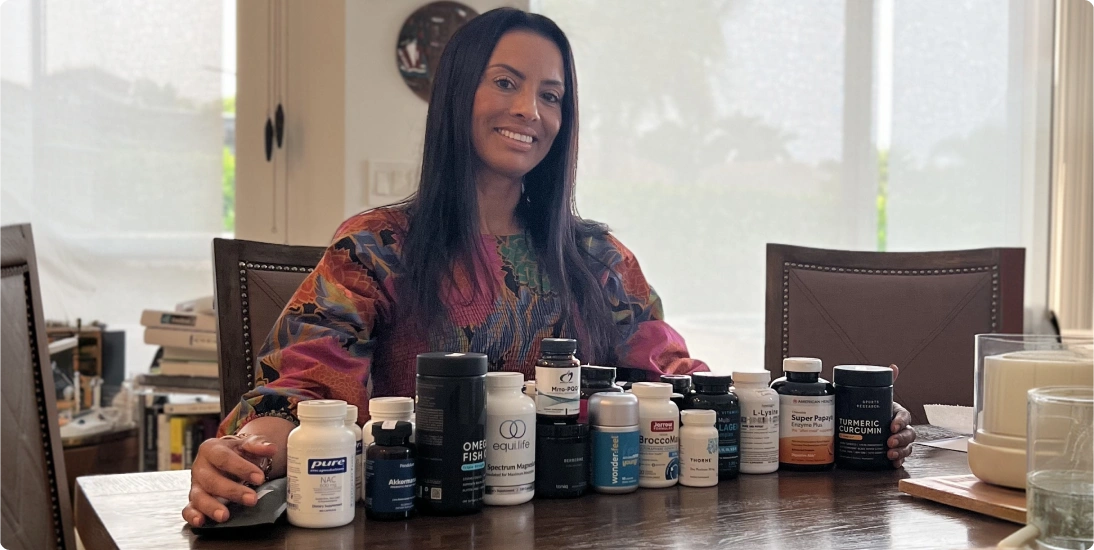



What are supplements?
Supplements are products such as vitamins, minerals, amino acids, herbs, botanicals, probiotics, or other compounds designed to help fill nutritional gaps or support specific needs. They can come as capsules, powders, tablets, liquids, or gummies. But they are not a substitute for real food. A healthy diet still provides the fiber, phytonutrients, protein structure, healthy fats, and food synergy that supplements cannot fully reproduce.
Andrew Huberman’s general approach to supplements
Andrew Huberman’s public guidance is very clear on one important point: supplements come after foundations. He emphasizes building health first with consistent sleep, morning light exposure, exercise, and proper nutrition. In other words, supplements may support health, but they should not be used to compensate for poor lifestyle habits.
Who really may need supplements?
1. People with a confirmed nutrient deficiency
If labs show low vitamin D, iron, B12, magnesium, or another nutrient, supplements may be appropriate to restore what the body is lacking. This is one of the clearest reasons to use them.
2. Women who are pregnant or could become pregnant
This is one of the strongest evidence-based examples. The NIH recommends that women and teen girls who could become pregnant consume 400 mcg of folic acid daily from supplements, fortified foods, or both, in addition to food folate, to help reduce the risk of neural tube defects.
3. Older adults
As we age, absorption changes. The NIH notes that many adults over 50 may not absorb vitamin B12 well from food and are advised to get most of their B12 from fortified foods or supplements. Vitamin D and calcium may also matter more for bone health as people get older.
4. People on restrictive diets
Vegans, some vegetarians, and people avoiding major food groups may need targeted supplementation, especially for nutrients like vitamin B12, and sometimes vitamin D, iron, zinc, or omega-3s depending on intake and labs.
5. People with poor absorption or specific medical conditions
Those with digestive disorders, low stomach acid, chronic medication use, prior bariatric surgery, or conditions affecting absorption may need supplements more than the average person. Even the NIH notes that absorption problems are a major reason some people do not get enough nutrients from food alone.
6. People with increased physiological demand
Athletes, people under intense training stress, those recovering from illness, and some individuals with higher nutritional demand may benefit from carefully chosen supplements—but this should still be based on diet quality, symptoms, and ideally labs. This is very different from taking random products “just in case.”
Who may not need supplements?
1. People eating a well-rounded diet with no deficiency signs
If someone eats enough high-quality protein, fruits, vegetables, minerals, healthy fats, and fiber, and has no symptoms or lab-confirmed gaps, they may not need much supplementation at all.
2. People using supplements as a replacement for food
A green powder is not vegetables. A multivitamin is not a healthy plate. A capsule cannot replace consistent nourishment, digestion, blood sugar balance, or lifestyle habits.
3. People taking products just because social media says so
A supplement that helps one person may be unnecessary—or even problematic—for another. More is not always better. Some people need more support, some need less.
What should be analyzed before choosing supplements?
1. Real need
Start with symptoms, health history, diet quality, medications, and labs when possible. Supplementation should be targeted, not random.
2. Quality
Not all supplements are created equal. The FDA does not approve dietary supplements for safety and effectiveness before they are marketed, and quality can vary. Third-party verification programs such as USP or NSF can add an extra layer of confidence.
3. Ingredients and excipients
Some people react not only to the active ingredient, but to fillers, dyes, binders, gums, sweeteners, or herbal blends. That is why reading the label matters.
4. Interactions
Supplements can interact with medications, other supplements, and certain health conditions. “Natural” does not automatically mean harmless.
5. Personal sensitivity
This is where a personalized approach becomes essential. For example, someone prone to calcium oxalate kidney stones may need to be careful with high-oxalate foods or even certain “superfood” supplements. The National Kidney Foundation notes that some foods and products are high in oxalates, and it also warns that some supplements, including high-dose vitamin C and certain plant-based powders, can increase oxalate burden in susceptible people.
The bottom line
Do we all need supplements daily? No.
But some people absolutely benefit from them when they are chosen carefully and used for the right reason.
The goal is not to take more supplements.
The goal is to take the right supplement, in the right form, for the right person, at the right time.
Real food comes first.
Then comes personalization.
Sources
NIH Office of Dietary Supplements (ODS)
Dietary Supplements: What You Need to Know
https://ods.od.nih.gov/factsheets/WYNTK-Consumer/
NIH Office of Dietary Supplements (ODS)
Dietary Supplement Fact Sheets
https://ods.od.nih.gov/factsheets/list-all/
NIH Office of Dietary Supplements (ODS)
Office of Dietary Supplements Home
https://ods.od.nih.gov/
NIH NCCIH
Using Dietary Supplements Wisely
https://www.nccih.nih.gov/health/using-dietary-supplements-wisely
NIH NCCIH
Dietary and Herbal Supplements
https://www.nccih.nih.gov/health/dietary-and-herbal-supplements
NIH NCCIH
5 Tips: What Consumers Need To Know About Dietary Supplements
https://www.nccih.nih.gov/health/tips/tips-what-consumers-need-to-know-about-dietary-supplements
Huberman Lab
Supplementation
https://www.hubermanlab.com/topics/supplementation
Huberman Lab
Essentials: Food & Supplements for Brain Health & Cognitive Performance
https://www.hubermanlab.com/episode/essentials-food-supplements-brain-health-cognitive-performance
FDA
Information for Consumers on Using Dietary Supplements
https://www.fda.gov/food/dietary-supplements/information-consumers-using-dietary-supplements
National Kidney Foundation
Kidney Stone Diet Plan and Prevention
https://www.kidney.org/kidney-topics/kidney-stone-diet-plan-and-prevention
National Kidney Foundation
Calcium Kidney Stones
https://www.kidney.org/kidney-topics/calcium-kidney-stones
NIDDK
Eating, Diet, & Nutrition for Kidney Stones
https://www.niddk.nih.gov/health-information/urologic-diseases/kidney-stones/eating-diet-nutrition