
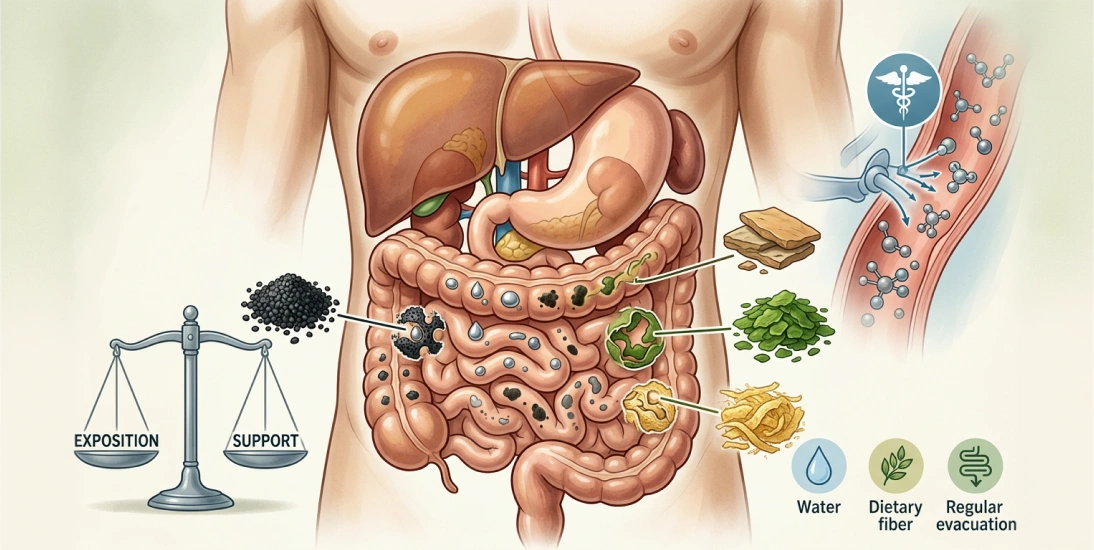



What is a binder?
Insulin resistance happens when the body’s cells do not respond properly to insulin, the hormone that helps move glucose out of the bloodstream and into cells for energy. Over time, the body has to produce more insulin to do the same job, and blood sugar regulation begins to break down.
What can binders bind?
This is where the conversation needs nuance.
Some binders are discussed for heavy metals. Others are used more often for toxins in the gut, including certain microbial byproducts or compounds dumped into bile. Some are also discussed in protocols involving mold-related toxins or environmental exposures. In other words, binders are not only about heavy metals. They may be used for a wider detox strategy, depending on the person and the situation.
But that does not mean every over-the-counter binder can safely or effectively remove stored heavy metals from tissues. In confirmed heavy metal poisoning, conventional medicine uses chelation therapy, and agencies like CDC/ATSDR describe chelation as something for specific cases under medical supervision because it also carries risks.
So, what is the difference between a binder and a chelator?
This difference matters.
A binder usually works mainly in the gut. It helps grab substances there and move them out through the stool.A chelator is a compound used to bind certain metals in the body so they can be excreted, often through urine. Chelation is a medical tool, not a casual wellness trend. It should be used carefully and based on proper history, symptoms, exposure assessment, and testing.
Does everyone have heavy metals in the body?
At some level of exposure, yes, environmental contact is common. CDC biomonitoring programs track chemicals and metals in the U.S. population precisely because these exposures are widespread enough to measure. Research using NHANES data has also found that combined exposure to multiple metals is common. But common exposure is not the same as saying that everyone is toxic or that everyone needs a detox protocol.
When might someone start asking about binders?
People usually become interested in binders when they are dealing with one or more of these:
- known or suspected environmental exposure
- high fish intake and concern about mercury
- poor gut health and a high toxic load from digestion or dysbiosis
- mold-related concerns
- a practitioner-guided detox protocol
- symptoms that raise questions about exposure history and detox capacity
Still, symptoms alone are not enough to prove heavy metal overload. Fatigue, brain fog, digestive symptoms, headaches, skin changes, and low energy can have many causes. When heavy metals are a real concern, proper evaluation matters.
Common binders people talk about
1. Activated charcoal
Activated charcoal is one of the most well-known binders. It is used medically in some poisoning situations because of its ability to adsorb many substances in the gut. In wellness protocols, it is often used more broadly, but timing matters because it can also interfere with medications or supplements.
2. Modified citrus pectin
Modified citrus pectin is one of the more interesting binder-related compounds in this space because small human studies have reported increased urinary excretion of certain toxic metals. That does not make it a cure-all, but it has more direct human data than many trendy detox ingredients.
3. Chlorella
Chlorella is frequently discussed in integrative and functional medicine detox protocols. Some preclinical research and limited human data suggest a possible role in reducing or enhancing elimination of some toxic elements, but the evidence is still not strong enough to treat it like a universal answer. Product quality also matters.
4. Zeolite and clay-based binders
Zeolite and certain clays are widely marketed as detox binders. There is substantial literature on zeolites as adsorbents in environmental remediation, and some reviews discuss safety and possible medical applications, but that is not the same as having strong clinical proof for every detox claim made online.
What binders do not do
Binders do not replace the liver.
Binders do not replace the kidneys.
Binders do not cancel out poor diet, dehydration, constipation, or ongoing exposure.
And binders should not be used to make people believe they can ignore the basics of detox support: fiber, hydration, regular bowel movements, nutrient sufficiency, sweating when appropriate, and lowering the incoming toxic load.
The biggest mistake in detox
One of the biggest mistakes is trying to “detox” aggressively without improving elimination.
If a person is constipated, dehydrated, undernourished, or already overwhelmed, adding random binders may make them feel worse. Also, some supplements can bind not only unwanted compounds but also medications, minerals, or other nutrients if taken at the wrong time. Safety, timing, and personalization matter.
My practical view as a wellness practitioner
I do believe binders can have a place in wellness protocols. But I do not see them as a trendy shortcut.
I see them as tools. The right tool depends on the person, the exposure, the gut, the drainage pathways, the testing, and the bigger clinical picture. Some people may benefit from gentle support. Some need to focus first on reducing exposure and improving gut and liver support. And some people need medical evaluation rather than a supplement protocol.
A smarter way to think about detox support
Before jumping into binders, ask:
- What am I being exposed to regularly?
- Am I constipated or eliminating well?
- Am I hydrated?
- Is my gut healthy enough to handle a protocol?
- Do I have real evidence of overload, or only vague symptoms?
- Do I need a wellness strategy, or a true medical workup?
That is a much wiser starting point than assuming every symptom means heavy metal toxicity.
Final thought
Binders can be helpful in the right context, but they are not magic, and they are not one-size-fits-all. The body already has detox systems built in. The first job is to reduce what is coming in. The second is to support what the body naturally uses to process and eliminate waste. And only then does it make sense to consider whether a binder belongs in the plan.
Sources
CDC. National Report on Human Exposure to Environmental Chemicals.
https://www.cdc.gov/biomonitoring/resources/national-exposure-report.html
CDC. Biomonitoring: Population Exposures.
https://www.cdc.gov/environmental-health-tracking/php/data-research/biomonitoring-population-exposures.html
NCCIH. “Detoxes” and “Cleanses”: What You Need To Know.
https://www.nccih.nih.gov/health/detoxes-and-cleanses-what-you-need-to-know
NIDDK. Your Kidneys & How They Work.
https://www.niddk.nih.gov/health-information/kidney-disease/kidneys-how-they-work
NCBI Bookshelf. In Brief: How Does the Liver Work?
https://www.ncbi.nlm.nih.gov/books/NBK279393/
MedlinePlus. Heavy Metal Blood Test.
https://medlineplus.gov/lab-tests/heavy-metal-blood-test/
ATSDR. Public Health Statement for Mercury.
https://www.atsdr.cdc.gov/toxprofiles/tp46-c1-b.pdf
Flora SJS, Pachauri V. Chelation in Metal Intoxication.
https://pmc.ncbi.nlm.nih.gov/articles/PMC2922724/
Eliaz I, Hotchkiss AT, Fishman ML, Rode D. The effect of modified citrus pectin on urinary excretion of toxic metals. Phytotherapy Research. 2006.
https://pubmed.ncbi.nlm.nih.gov/16835878/
Zhao ZY, Liang L, Fan X, et al. The role of modified citrus pectin as an effective chelator of lead in children hospitalized with toxic lead levels. Alternative Therapies in Health and Medicine. 2008.
https://pubmed.ncbi.nlm.nih.gov/18616067/
Pavelić SK, et al. Critical Review on Zeolite Clinoptilolite Safety and Medical Applications in Vivo.
https://pubmed.ncbi.nlm.nih.gov/30538633/
Bhattacharya S, et al. The Role of Spirulina (Arthrospira) in the Mitigation of Heavy Metal Toxicity.
https://pubmed.ncbi.nlm.nih.gov/32749124/
Dr. Mark Hyman. How to Help Your Body Eliminate Toxins.
https://drhyman.com/blogs/content/how-to-help-your-body-eliminate-toxins
Dr. Mark Hyman. How to Detox for Longevity.
https://drhyman.com/blogs/content/how-to-detox-for-longevityCDC.
National Report on Human Exposure to Environmental Chemicals.