

But from a functional health perspective, we need to look deeper.
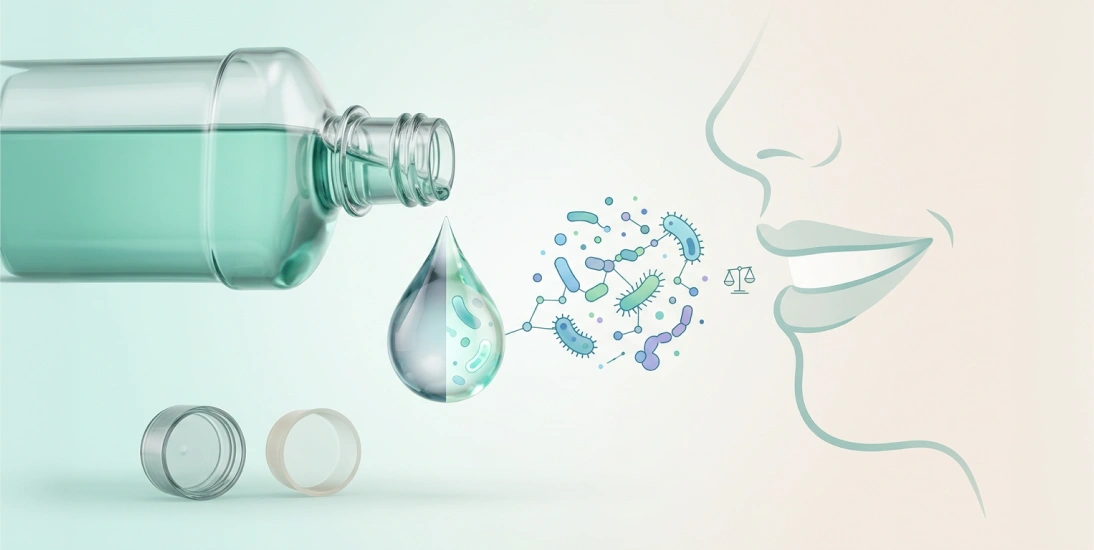
The mouth is not supposed to be sterile. The mouth is an ecosystem. It has bacteria, enzymes, minerals, saliva, immune factors, and a very important connection with digestion, the gut, cardiovascular health, and nitric oxide production. When we use strong antiseptic mouthwash every day, especially the ones that advertise “kills 99.9% of germs,” we may not be only killing bad bacteria. We may also be damaging the beneficial bacteria that help protect the mouth and support whole-body health.
Research shows that certain antiseptic mouthwashes can disrupt the oral microbiome and reduce the bacteria involved in the nitrate–nitrite–nitric oxide pathway, which is important for blood flow, vascular function, and blood pressure regulation.
What Is the Oral Microbiome?
The oral microbiome is the community of microorganisms living in the mouth: on the tongue, teeth, gums, saliva, cheeks, and throat. Like the gut microbiome, the oral microbiome is not just “good” or “bad.” It is about balance.
A healthy oral microbiome helps protect against overgrowth of harmful bacteria, supports gum health, helps maintain a healthier oral pH, participates in the first steps of digestion, and plays a role in nitric oxide production. The mouth is the beginning of the digestive tract, so what happens in the mouth does not stay only in the mouth.
Important nitrate-reducing bacteria in the mouth include Rothia, Neisseria, Actinomyces, Veillonella, Schaalia, Streptococcus, Prevotella, and others. These bacteria help convert dietary nitrate from foods like arugula, spinach, celery, beetroot, lettuce, and other vegetables into nitrite, which can later become nitric oxide.
Nitric oxide is a signaling molecule that supports blood vessel relaxation, circulation, oxygen delivery, endothelial function, and healthy blood pressure. This is why the mouth is so important. You can eat the best nitrate-rich vegetables, but if your oral bacteria are damaged, your body may not fully convert those nitrates into nitric oxide.
The Mouth Starts Digestion
Digestion starts in the mouth. Saliva contains enzymes such as salivary amylase, which begins the breakdown of carbohydrates. Saliva also helps lubricate food, supports swallowing, protects enamel, buffers acids, and carries immune compounds.
So, when we think about oral health, we cannot think only about “fresh breath.” We need to think about the mouth as the first step of digestion and the first contact between food, bacteria, enzymes, and the rest of the body.This is why I always say: we don’t want to sterilize the mouth. We want to support balance.
Why Strong Mouthwash Can Be a Problem
Many conventional mouthwashes are designed to kill bacteria broadly. The problem is that they are not very selective. They may reduce bacteria associated with plaque and bad breath, but they may also reduce beneficial bacteria that help protect the mouth and support nitric oxide production.
Chlorhexidine, for example, is a very strong antimicrobial rinse often prescribed for gum disease or after dental procedures. It can be useful short-term when prescribed by a dentist, but it is not something I would treat like a daily wellness product. Research reviews show chlorhexidine can contribute to oral microbiome dysbiosis, meaning it can shift the balance of the oral ecosystem.
Studies also show that antiseptic mouthwash can interfere with the nitrate–nitrite–nitric oxide pathway. One review explains that when antiseptic mouthwash eradicates oral bacterial flora, the nitric-oxide-generating pathway can be reduced or abolished.
Another review by nitric oxide researcher Dr. Nathan Bryan states that disruption of oral microbiota by antiseptic mouthwash or antibiotics can suppress nitric oxide production through the nitrate–nitrite–nitric oxide pathway and negatively affect blood pressure.
Ingredients in Mouthwash That May Be Problematic
Not all mouthwashes are the same. Some are therapeutic and may be useful for specific dental conditions. But these ingredients deserve caution:
1. Alcohol
Alcohol is common in many mouthwashes. It gives that strong burning sensation, but burning does not mean healing. Alcohol can dry the mouth, irritate tissues, and may make bad breath worse over time because dry mouth creates a more favorable environment for odor-producing bacteria. Many dentists recommend alcohol-free rinses for people with dry mouth or irritation.
2. Chlorhexidine
Chlorhexidine can be very effective against plaque and gingivitis, but it is strong and should usually be used only when recommended by a dentist, often for short-term therapeutic purposes. It can stain teeth, alter taste, increase calculus buildup, and disrupt oral microbial balance.
3. Cetylpyridinium Chloride, also called CPC
CPC is used to reduce bad breath and bacteria. It may be helpful in some therapeutic mouthwashes, but it is still antimicrobial. For someone using mouthwash multiple times per day, I would be cautious, especially if the goal is to protect the oral microbiome and nitric oxide pathway. The ADA lists CPC as an ingredient used to reduce bad breath, but functional health concerns come from overuse and broad antimicrobial effects.
4. Peroxide
Hydrogen peroxide is found in some whitening mouthwashes. Occasional use may be recommended in certain situations, but frequent use can irritate tissues and may not be ideal for someone trying to restore the oral microbiome.
5. Artificial colors, strong flavors, and harsh preservatives
Some mouthwashes contain artificial dyes, synthetic flavors, sweeteners, and preservatives that may irritate sensitive mouths. These ingredients are not always the biggest issue, but for someone with inflammation, dry mouth, oral sensitivity, or microbiome imbalance, I prefer a cleaner formula.
The Nitric Oxide Connection
This is one of the most important parts of this topic.
When we eat nitrate-rich vegetables, the nitrate is absorbed and secreted back into saliva. Then oral bacteria convert nitrate into nitrite. This nitrite can later be converted into nitric oxide. This is called the enterosalivary nitrate–nitrite–nitric oxide pathway.
So, the bacteria in the mouth are not random. They are part of a biochemical pathway.
This is why daily aggressive mouthwash use may reduce some of the benefits of a healthy diet. You may drink beet juice, eat arugula, eat celery, eat spinach, and try to support circulation, but if you are killing the bacteria responsible for nitrate conversion, you may be blocking part of that benefit.
Dr. Nathan Bryan writes: “We need nitrate reducing bacteria in the mouth” to use nitrate from green leafy vegetables.
Dr. Steven Lin, a functional dentist, explains: “Many conventional mouthwashes hurt your oral flora.”
These two quotes summarize the whole point: oral bacteria are not the enemy. Imbalance is the enemy.
Does This Mean Nobody Should Ever Use Mouthwash?
No. This is not about fear. This is about using the right product for the right reason.
There are times when a dentist may recommend a therapeutic mouthwash, especially for gum disease, after surgery, infection risk, high cavity risk, braces, or specific dental conditions. The ADA recognizes that mouthrinses may contain ingredients like fluoride for cavity prevention, chlorhexidine or essential oils for plaque and gingivitis, CPC for bad breath, and peroxide for whitening.
But there is a big difference between short-term therapeutic use and daily aggressive use just to feel fresh.
From a functional medicine perspective, I would not recommend using strong antibacterial mouthwash every day as a routine habit unless there is a specific reason and professional guidance.
What to Use Instead
The first step is not mouthwash. The first step is building the oral terrain.
That means:
Brush well, preferably with a clean toothpaste.
Floss daily.
Use a tongue scraper gently, not aggressively.
Stay hydrated.
Support saliva production.
Avoid excess sugar and ultra-processed foods.
Eat mineral-rich, fiber-rich, nitrate-rich foods.
Breathe through the nose when possible.
Address gut issues, reflux, dry mouth, and inflammation if bad breath is chronic.
Bad breath is often not just a mouth problem. It can come from gum disease, dry mouth, tonsil stones, reflux, sinus issues, dysbiosis, poor digestion, high sugar intake, dehydration, or an imbalanced oral microbiome.
If Someone Really Wants to Use Mouthwash
Choose a mouthwash that is:
Alcohol-free
Gentle
pH-balanced
Free of artificial dyes
Free of harsh burning ingredients
Not advertised as “kills 99.9% of germs” for daily use
Supportive of enamel and saliva
Preferably with minerals or hydroxyapatite
Possibly with xylitol, aloe vera, or mild essential oils in appropriate amounts
For people with high cavity risk, a dentist may recommend a fluoride rinse. Fluoride is recognized by the ADA as an ingredient that helps prevent tooth decay.
For a more functional approach, some people prefer hydroxyapatite-based oral care because hydroxyapatite supports enamel remineralization. Xylitol can also help support a healthier oral environment because it reduces the ability of certain cavity-promoting bacteria to thrive.
Natural Mouth Rinse Option
A very simple homemade rinse can be:
Gentle Mineral Mouth Rinse
- 1 cup filtered water
- ¼ teaspoon baking soda
- A pinch of sea salt or mineral salt
- Optional: 1 teaspoon xylitol powder
- Optional: a few drops of alcohol-free aloe vera juice
Mix well and swish for 20–30 seconds. Do not swallow.
This is not meant to treat gum disease or infection. It is just a gentle rinse to freshen the mouth without trying to sterilize the microbiome.
I would avoid making very strong essential oil rinses at home because essential oils can be irritating when not diluted correctly. More is not better.
My Final Message
Mouthwash became popular because people want clean breath, confidence, and oral health. But we need to understand that the mouth is not dirty because it has bacteria. The mouth becomes unhealthy when the ecosystem is out of balance.
Strong mouthwash may give temporary fresh breath, but it may also damage the oral microbiome, dry the mouth, reduce beneficial bacteria, and interfere with nitric oxide production.
So, my recommendation is simple:Do not try to sterilize your mouth.
Support your mouth.
Support your saliva.
Support your minerals.
Support your oral microbiome.
And remember: your mouth is the beginning of your gut and one of the first places where whole-body health begins.
Sources:
Antiseptic mouthwash, the nitrate–nitrite–nitric oxide pathway and hospital mortality: a hypothesis generating review
https://pmc.ncbi.nlm.nih.gov/articles/PMC7567004/
Pathways Linking Oral Bacteria, Nitric Oxide Metabolism, and Health
https://pmc.ncbi.nlm.nih.gov/articles/PMC9124908/
Over-the-Counter Mouthwash Use, Nitric Oxide and Hypertension Risk
https://pmc.ncbi.nlm.nih.gov/articles/PMC7125030/
The Oral Microbiome, Nitric Oxide and Exercise Performance — Dr. Nathan S. Bryan
https://www.sciencedirect.com/science/article/pii/S1089860322000544
Oral Microbiome and Nitric Oxide: The Missing Link in the Management of Blood Pressure — Dr. Nathan S. Bryan
https://pubmed.ncbi.nlm.nih.gov/28353075/
Nitrate as a Potential Prebiotic for the Oral Microbiome
https://www.nature.com/articles/s41598-020-69931-x
Nitrate-Responsive Oral Microbiome Modulates Nitric Oxide Homeostasis and Blood Pressure in Humans
https://www.sciencedirect.com/science/article/pii/S0891584918309110
Nitrite-Producing Oral Microbiome in Adults and Children
https://www.nature.com/articles/s41598-020-73479-1
Chlorhexidine in Dentistry: Pharmacology, Uses, and Adverse Effects
https://pmc.ncbi.nlm.nih.gov/articles/PMC9275362/
American Dental Association: Mouthrinse / Mouthwash
https://www.ada.org/resources/ada-library/oral-health-topics/mouthrinse-mouthwash
Mayo Clinic: Chlorhexidine Oral Route
https://www.mayoclinic.org/drugs-supplements/chlorhexidine-oral-route/description/drg-20068551
Dr. Steven Lin: Does Mouthwash Kill Good Bacteria?
https://www.drstevenlin.com/mouthwash-kills-good-bacteria/
Dr. Nathan Bryan: Good Mouth Bacteria Are Necessary for Optimal Nitric Oxide Production
https://drnathansbryan.com/good-mouth-bacteria-are-necessary-for-optimal-nitric-oxide-production-are-common-dental-hygienic-practices-putting-us-at-risk-for-heart-disease/