
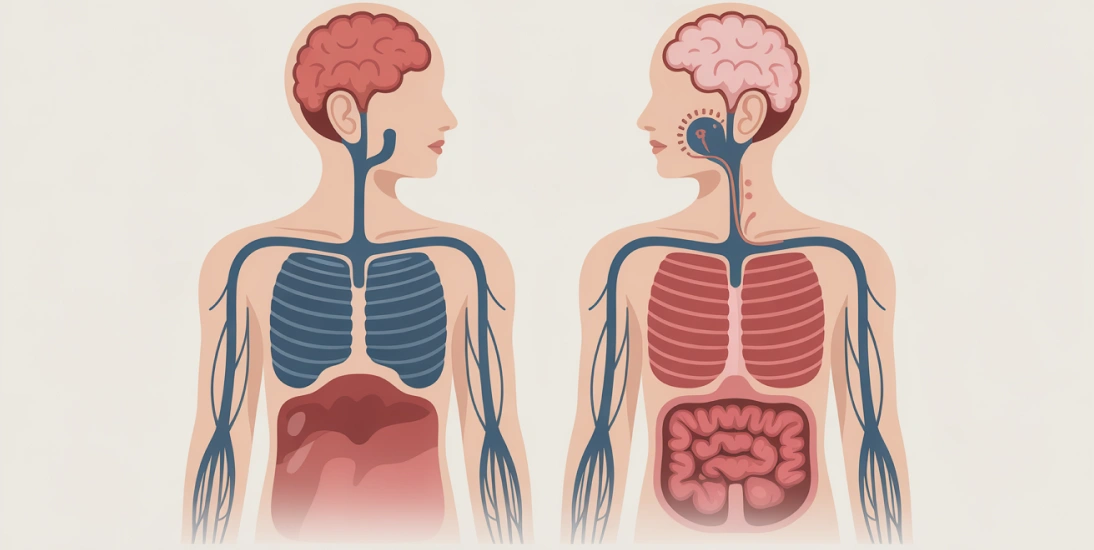



Today, it is easier than ever to live in ways that look convenient on the surface but slowly wear the body down underneath. Highly processed food is everywhere. Movement is optional. Stress is constant. Sleep is often sacrificed. And we are exposed daily to chemicals and pollutants our bodies were never designed to handle in such large amounts.
The result is not just “getting older.” It is accelerated aging — the kind that shows up as fatigue, brain fog, stubborn weight gain, inflammation, metabolic issues, poor recovery, and chronic disease earlier than many people expect. Research on healthy aging consistently shows that long-term function and disease risk are shaped not only by genetics, but also by metabolic health, inflammation, stress biology, mitochondrial function, and lifelong environmental exposures.
So, if the goal is not just to live longer, but to live better longer, these are five of the biggest drivers to pay attention to.
1. Insulin Resistance
Insulin resistance happens when the body’s cells do not respond properly to insulin, the hormone that helps move glucose out of the bloodstream and into cells for energy. Over time, the body has to produce more insulin to do the same job, and blood sugar regulation begins to break down.
Why it happens so often today
This problem is incredibly common in modern life because many of the conditions that promote it are now normal: too much sitting, too little movement, excess body fat, poor sleep, frequent eating of refined and highly processed foods, and chronic stress. Research also shows that sedentary behavior and sleep disruption can worsen insulin sensitivity, which helps explain why insulin resistance has become so widespread.
How it accelerates aging and disease
Insulin resistance does much more than raise blood sugar. It is closely tied to type 2 diabetes, cardiovascular disease, metabolic syndrome, fatty liver disease, and other age-related disorders. It also feeds low-grade inflammation and worsens other biological processes involved in aging, which is why it is often considered one of the central engines behind faster decline in health.
What helps protect you
The most powerful protection is still lifestyle: a diet centered on whole foods and fiber, enough protein, controlled portion sizes, regular exercise, resistance training, better sleep, less prolonged sitting, and improved body composition. Insulin resistance is not inevitable. It is one of the most modifiable drivers of poor aging.
2. Chronic Inflammation
Inflammation is one of the body’s natural defense systems. In the short term, it helps heal and protect. But when inflammation becomes persistent and low-grade, it turns from a helpful response into ongoing damage. This chronic state is often referred to as inflammaging, because it is so strongly linked to biological aging.
Why it happens so often today
Modern lifestyles create the perfect conditions for this kind of chronic inflammation: poor diet quality, excess visceral fat, smoking, inactivity, poor sleep, chronic stress, ongoing immune triggers, and cumulative cellular wear and tear. In other words, many of the habits that seem normal today are also the habits that keep the body in a constant low-level inflammatory state.
How it accelerates aging and disease
Chronic inflammation is one of the clearest biological links between lifestyle and age-related disease. It is associated with cardiovascular disease, insulin resistance, frailty, neurodegeneration, immune dysfunction, and many chronic illnesses that become more common with age. It also interacts with other hallmarks of aging, amplifying damage across multiple systems at once.
What helps protect you
An anti-inflammatory lifestyle is built from daily basics: nutrient-dense food, physical activity, restorative sleep, stress reduction, a healthy waistline, and not smoking. There is no single magic fix. The body becomes less inflamed when the entire pattern of living becomes less inflammatory.
3. Mitochondrial Dysfunction
Mitochondria are often called the “powerhouses” of the cell because they help produce the energy the body needs to function. But their role is bigger than energy alone. They are deeply involved in metabolism, oxidative balance, cell signaling, and resilience. When mitochondria stop functioning well, the body loses efficiency at the most basic cellular level.
Why it happens so often today
Mitochondrial dysfunction tends to build over time in response to aging itself, but it is also worsened by inactivity, poor metabolic health, chronic inflammation, oxidative stress, poor diet, and environmental insults. This means that many common features of modern life place a steady burden on the body’s energy systems.
How it accelerates aging and disease
When mitochondria are impaired, people often feel it as low energy, slower recovery, weaker muscles, poorer metabolic flexibility, and reduced resilience. At the disease level, mitochondrial dysfunction is linked to metabolic disorders, cardiovascular disease, neurodegenerative disease, frailty, and other age-related decline. It is widely recognized as one of the major hallmarks of aging.
What helps protect you
Mitochondria respond especially well to the fundamentals: regular movement, strength training, metabolic health, stable blood sugar, adequate sleep, and a nutrient-rich diet. Supporting mitochondria is one of the clearest ways to support healthspan, because better cellular energy affects nearly every system in the body.
4. Chronic Stress
Stress itself is not the enemy. The real problem is chronic, unresolved stress — when the body remains in a prolonged state of biological alert without enough recovery. Researchers often describe the cumulative wear from this process as allostatic load, meaning the “wear and tear” that builds up when stress responses stay activated too often or too long.
Why it happens so often today
For many people, stress is no longer occasional. It is constant: overwork, financial pressure, social isolation, poor sleep, information overload, emotional strain, caregiving demands, trauma, and the pressure to always stay “on.” Even when people adapt psychologically, the body can continue paying the biological cost.
How it accelerates aging and disease
Chronic stress affects hormones, immune regulation, inflammation, blood pressure, metabolism, and brain health. It has been linked to accelerated biological aging, insulin resistance, and poorer healthy aging outcomes. In practical terms, chronic stress can make people feel older, recover more slowly, and become more vulnerable to chronic disease over time.
What helps protect you
Protection does not come from avoiding all stress. It comes from improving recovery capacity. Sleep, exercise, time outdoors, social connection, prayer or spiritual practices, deep breathing, healthy boundaries, and rhythms of rest all help reduce allostatic load. Healthy aging depends not only on how hard we push, but on how well we recover.
5. Environmental Toxins
Environmental toxins include the harmful substances we encounter in air, water, food, packaging, household products, and the broader built environment. This includes air pollution, pesticides, heavy metals, endocrine-disrupting chemicals, and the growing concern around microplastics. Researchers increasingly study these lifelong cumulative exposures under the concept of the exposome.
Why it happens so often today
Exposure is so common because it is built into everyday life. Plastic packaging, contaminated dust, polluted air, conventional agriculture, industrial chemicals, personal care products, and drinking water contaminants all add to the body’s total burden. Microplastics in particular have been detected in a variety of human tissues and samples, although the full clinical significance is still being studied.
How it accelerates aging and disease
Environmental toxins can promote oxidative stress, inflammation, endocrine disruption, mitochondrial strain, and cellular dysfunction — all of which overlap with the biology of aging. Reviews on the exposome and aging describe environmental load as an important contributor to age-related disease risk, and recent studies suggest that some forms of air pollution may accelerate biological aging.
What helps protect you
We cannot eliminate every exposure, but we can reduce the total load. Filtering water, organic foods, improving indoor air quality, reducing plastic contact with food, choosing cleaner household and personal care products, washing produce well, and prioritizing whole foods over heavily packaged foods are practical ways to lower exposure. The goal is not perfection. The goal is to reduce the burden the body has to carry every day.
The Bottom Line
Faster aging does not usually come from one dramatic event. More often, it comes from years of small biological insults that accumulate.
Insulin resistance, chronic inflammation, mitochondrial dysfunction, chronic stress, and environmental toxins do not operate separately. They overlap and amplify one another. Stress can worsen insulin resistance. Insulin resistance can drive inflammation. Inflammation can damage mitochondria. Toxins can intensify all of the above. That is why aging often feels like a slow drift away from vitality before it becomes a diagnosis.
The encouraging news is that many of the biggest drivers of faster aging are influenced by everyday choices. The way we eat, move, sleep, recover, manage stress, and reduce toxic load can shape not only how long we live, but how well we live. The World Health Organization defines healthy ageing as maintaining the functional ability that enables well-being in older age — and that starts long before old age begins.
What Comes Next
In the next part of this blog, we’ll look at practical ways to support longevity and protect healthspan through daily habits that truly matter — from food and movement to recovery, community, and a more resilient lifestyle.
Because the goal is not simply to get older.
It is to age with strength, clarity, energy, and life still in you.
Sources
1. World Health Organization (WHO). GHE: Life expectancy and healthy life expectancy.
https://www.who.int/data/gho/data/themes/mortality-and-global-health-estimates/ghe-life-expectancy-and-healthy-life-expectancy
2. World Health Organization (WHO). Ageing.
https://www.who.int/health-topics/ageing
3. World Health Organization (WHO). Promoting physical activity and healthy diets for healthy ageing.
https://www.who.int/europe/publications/i/item/WHO-EURO-2023-8002-47770-70520
4. National Institute of Diabetes and Digestive and Kidney Diseases (NIDDK). Insulin Resistance & Prediabetes.
https://www.niddk.nih.gov/health-information/diabetes/overview/what-is-diabetes/prediabetes-insulin-resistance
5. National Institute of Diabetes and Digestive and Kidney Diseases (NIDDK). Diabetes Overview.
https://www.niddk.nih.gov/health-information/diabetes
6. Duarte-Mendes P, et al. (Un)healthy lifestyles, aging, and type 2 diabetes.
https://pmc.ncbi.nlm.nih.gov/articles/PMC12738946/
7. Yaribeygi H, et al. Pathophysiology of Physical Inactivity-Dependent Insulin Resistance.
https://pmc.ncbi.nlm.nih.gov/articles/PMC8516544/
8. Baechle JJ, et al. Chronic inflammation and the hallmarks of aging.
https://pmc.ncbi.nlm.nih.gov/articles/PMC10359950/
9. Ferrucci L, Fabbri E. Inflammageing: chronic inflammation in ageing.
https://pmc.ncbi.nlm.nih.gov/articles/PMC6146930/
10. Amorim JA, et al. Mitochondrial and metabolic dysfunction in ageing and age-related diseases.
https://pmc.ncbi.nlm.nih.gov/articles/PMC9059418/
11. Xu X, et al. Mitochondria in oxidative stress, inflammation and aging.
https://www.nature.com/articles/s41392-025-02253-4
12. Sahab L, et al. Allostatic Load, Social Participation, and Healthy Ageing.
https://pmc.ncbi.nlm.nih.gov/articles/PMC12733008/
13. Lavretsky H, Newhouse PA. Stress, Inflammation and Aging.
https://pmc.ncbi.nlm.nih.gov/articles/PMC3428505/
14. Yegorov YE, et al. The Link between Chronic Stress and Accelerated Aging.
https://pmc.ncbi.nlm.nih.gov/articles/PMC7400286/
15. Kareem MA, et al. The Role of the Exposome in Aging and Age-Related Diseases.
https://pmc.ncbi.nlm.nih.gov/articles/PMC12156545/
16. Aliberti SM, et al. A Comprehensive Review of the Exposome’s Role in Healthy Aging.
https://pmc.ncbi.nlm.nih.gov/articles/PMC11858149/
17. Ririe AK, et al. Impact of Microplastic Exposure on Human Health.
https://pmc.ncbi.nlm.nih.gov/articles/PMC12848325/
18. Ioannou C, et al. Ambient air pollution exposure and epigenetic aging.
https://pubmed.ncbi.nlm.nih.gov/41564677/